
Finance new machinery or upgrade existing equipment through banks and NBFCs with simple documentation and repayment up to 60 months.
Starting rate p.a.
Tenure up to
Approvals
*Rates vary by lender and profile.
Share your details - an advisor will call you back.
Starting interest rate
Customer rating
Customers served
A machinery and equipment loan is a business financing option that helps eligible enterprises fund the purchase of new machinery, replace outdated equipment or expand existing production capabilities. It can support businesses looking to improve manufacturing capacity, modernise operations or meet increasing customer demand without allocating the entire investment from available funds upfront.
The financing terms depend on factors such as the machinery being purchased, business turnover, financial statements, credit history and repayment capacity. Depending on the lender and loan product, security requirements, eligible loan amounts and repayment tenures may also vary.
At Networth Advisory, we help manufacturers and growing businesses explore machinery financing options through our network of banks and NBFCs. Our team guides you through the indicative eligibility criteria, machinery-related documentation and available financing options based on your business requirements.
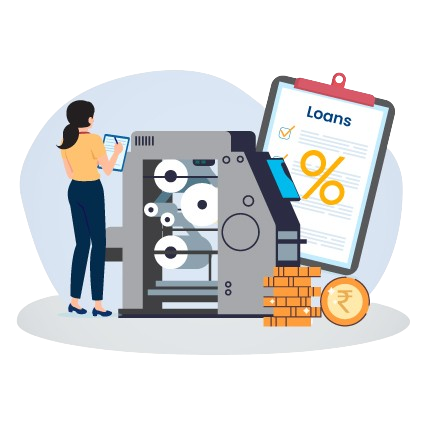
Invest in the Machinery That Moves Your Business Forward
For manufacturing and industrial businesses, machinery is more than an operational asset. It plays a direct role in production capacity, product quality, operational efficiency and the ability to fulfil customer orders. As business requirements evolve, investing in new equipment or upgrading existing machinery can become an important part of long-term growth.
A machinery and equipment loan can help eligible businesses finance these investments while planning how their available funds are allocated across day-to-day operations, inventory, salaries and other working capital requirements. The right financing structure depends on the machinery being purchased, the business’s financial position and the lender’s assessment.
Purchasing machinery often requires a significant initial investment, particularly when a business is expanding its production facilities or introducing new manufacturing capabilities. Equipment financing allows eligible businesses to explore funding for approved machinery purchases instead of relying entirely on available cash reserves.
Depending on the lender’s policies, financing may be considered for machinery used in manufacturing, processing, packaging and other eligible industrial activities. The sanctioned amount can depend on the equipment’s cost, supplier quotation or invoice, business financials and the applicant’s repayment capacity.
Before selecting a financing option, businesses should assess the machinery’s expected operational value, installation costs and contribution to future production requirements.
When customer demand increases, existing machinery may no longer be sufficient to meet production schedules. Investing in additional equipment can help businesses increase output, manage larger orders and support their next stage of expansion.
Machinery financing may help eligible enterprises explore funding for additional production lines or equipment required to increase capacity. The decision should be based on realistic demand forecasts, expected utilisation and the business’s ability to manage the additional financial commitment.
A well-planned investment considers not only the cost of purchasing equipment but also the operating expenses associated with running it.
Older machinery may limit production efficiency, require frequent maintenance or struggle to meet changing quality requirements. Upgrading equipment can be a practical consideration for businesses seeking to modernise their operations.
A machinery loan may help eligible businesses explore financing for replacement equipment or upgrades, subject to the lender’s product terms. Before proceeding, compare the cost of the new machinery with the expected benefits, maintenance requirements, energy consumption and potential effect on production.
The objective is to make an investment that supports business performance while keeping the repayment commitment manageable.
Machinery purchases can place pressure on business liquidity, particularly when funds are also required for raw materials, supplier payments, wages, transportation and routine operating expenses.
Equipment financing may allow an eligible business to spread the cost of an investment over an agreed repayment period rather than paying the entire amount upfront. This can help the business plan how its available cash is allocated, although the loan EMI itself becomes an additional financial obligation.
Businesses should evaluate their working capital cycle and expected cash inflows before taking on machinery-related debt. Preserving liquidity is useful only when the resulting repayment structure remains sustainable.
Machinery and equipment requirements vary by sector and production activity. A manufacturing unit may need specialised production machinery, while a packaging business may require filling, sealing or labelling equipment. Processing units and eligible construction-related businesses may have different equipment requirements altogether.
Depending on the lender’s product scope, financing may be considered for eligible equipment used in:
Manufacturing and production: Equipment for production lines, fabrication and industrial operations.
Packaging and processing: Machinery used for packaging, material handling and processing activities.
Industrial expansion: Additional equipment required to support higher production volumes.
Machinery replacement: New equipment intended to replace outdated or inefficient machinery.
Eligible project requirements: Equipment needed for specific business or infrastructure-related operations, subject to lender policy.
Eligibility is determined by the lender and may vary according to the equipment category, business activity and financing purpose.
The starting interest rate advertised for a machinery loan is an indicative figure and may not be available to every applicant. Lenders can consider the business’s credit profile, financial statements, repayment history, existing obligations, loan amount and other factors when determining the applicable terms.
In addition to the interest rate, businesses should review processing fees, applicable taxes, documentation charges and other costs associated with the loan. The overall borrowing cost should be considered alongside the expected financial benefit of the machinery investment.
Comparing offers on the basis of total repayment, EMI and loan conditions can help business owners make a more informed decision.
The repayment tenure influences both the monthly instalment and the total interest payable. A longer tenure may reduce the EMI but can increase the overall interest cost, while a shorter tenure may require higher monthly repayments.
For machinery financing, repayment planning should take account of production cycles, customer payment timelines, seasonal fluctuations and other existing business commitments. Where possible, evaluate whether the machinery is expected to contribute to revenue or operational savings over the proposed repayment period.
The appropriate tenure depends on the business’s financial capacity and the options offered by the lender. Use an EMI calculator to estimate possible repayments before finalising a financing decision.
Security requirements for machinery loans vary between lenders and financing products. Some options may require collateral, while others may be assessed under different security arrangements depending on the applicant’s profile and the nature of the equipment.
The machinery being financed may itself form part of the security arrangement, and additional collateral or a guarantee may be required under the lender’s terms. Business owners should confirm the security conditions before accepting an offer rather than assuming that every machinery loan is collateral-free.
A clear understanding of these requirements helps businesses evaluate the financing structure and any obligations attached to the loan.
Lenders generally review the business’s financial position and the details of the proposed machinery purchase before making a decision. Depending on the application, documents may include identity and business registration proofs, PAN, GST records where applicable, bank statements, financial statements and the machinery quotation or invoice.
The lender may also request information about business vintage, turnover, existing borrowings, repayment history and the intended use of the equipment. Requirements can vary according to the lender and the applicant’s business profile.
Preparing accurate and relevant documents can support the assessment process, but complete documentation does not guarantee approval.
A machinery investment should be assessed as a business decision, not just a financing opportunity. Consider how the equipment will affect production output, labour requirements, product quality, maintenance costs and the ability to fulfil orders.
Estimate the additional revenue or operational savings that the investment may generate, while allowing for installation time, downtime and possible fluctuations in demand. Compare these expectations with the proposed EMI and the business’s existing financial obligations.
A realistic assessment can help business owners decide whether to proceed immediately, consider a different equipment option or adjust the financing requirement.
Networth Advisory helps businesses explore machinery and equipment financing options through its network of banks and NBFCs. Whether you are purchasing new machinery, expanding production capacity or upgrading existing equipment, our team can guide you through indicative eligibility requirements, relevant documentation and available financing options.
The final loan amount, interest rate, tenure, security requirements and approval decision depend on the lending institution’s assessment and applicable terms. Businesses should review the complete offer and ensure that the repayment commitment aligns with their financial position and investment objectives.
From increasing production to upgrading existing equipment, explore financing options that support your business requirements.
Finance machinery to increase production capacity, improve efficiency and meet growing demand.
Explore funding for packaging lines, processing machines and equipment for smoother operations.
Explore financing for eligible construction machinery and equipment required for projects.
Upgrade outdated equipment or invest in modern machinery to support business expansion.
From understanding your machinery requirements to exploring suitable funding options, our team guides you through the process at every step.
Tell us about the machinery you need and your business funding requirements.
Share your business profile, turnover and estimated financing requirement with our team.
Submit the relevant business, financial and machinery documents and invoice requested for assessment.
We help you explore suitable options from banks and NBFCs, subject to eligibility.
The lender evaluates your application and determines approval, terms and disbursement.
Do you qualify?
KYC
GST & PAN
Registration proof
Frequently asked questions
A loan that does not require any collateral. It is granted on the strength of your credit score, financial health and repayment history, and can be used for business expenses and growth.
Self-employed Indian business owners aged 24–65 with at least 3 years of business vintage, a CIBIL score of 685+ and an annual turnover of ₹2 Cr or more.
Yes. Eligible applicants can get funded without pledging any property or asset.
Yes. The entire process form, documents and approval can be completed online without visiting a branch.
Some lenders offer quick approval, and funds generally reach you within a few days of approval, depending on the lender and your documents.
ID proof, address proof, business proof and bank statements.
Speak to a Networth advisor today no obligation, complete clarity.
Networth Advisory is a new-age financial services platform that brings lenders and borrowers together for a seamless and fuss-free loan disbursal experience. We are associated with the reputed Banks and Non-Banking Financial Companies (NBFCs) in the country. We offer competitive and reasonable loan interest rates.
Read more
A new-age financial services platform connecting borrowers with reputed banks and NBFCs for a seamless loan experience.